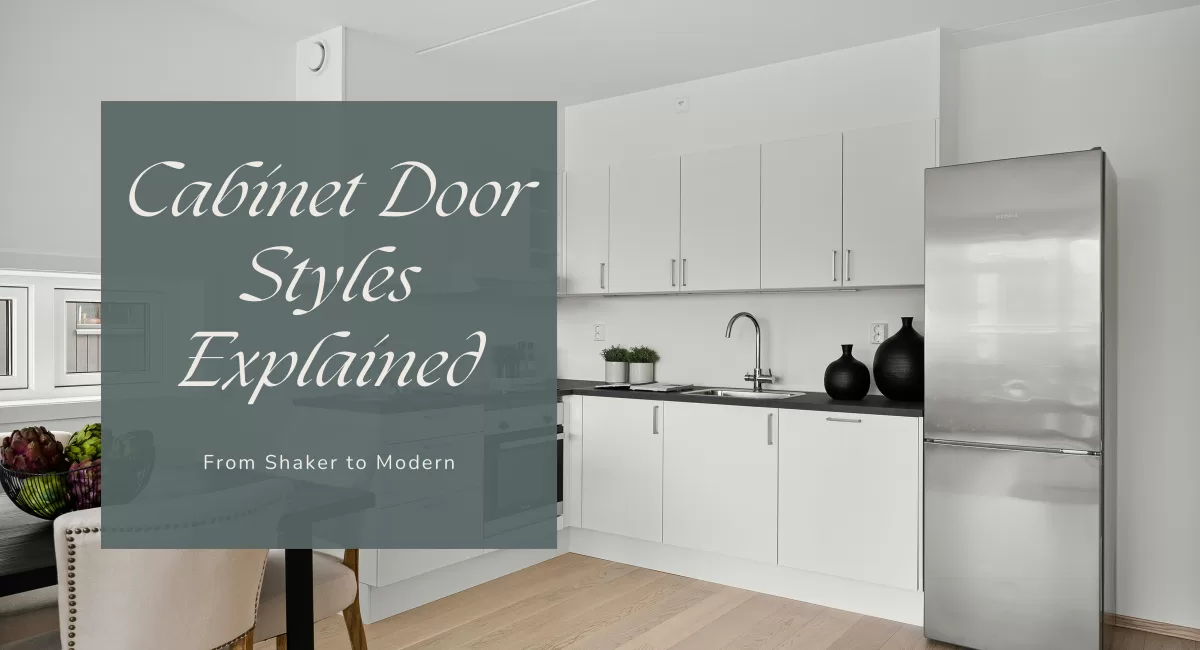
Cabinet Door Styles Explained: From Shaker to Modern

When you walk into a kitchen, the cabinet door styles are one of the first things you see. They dictate whether a kitchen looks classic, modern, farmhouse, or a blend of styles. In this post, you’ll learn to identify the most common cabinet door styles. We’ll focus on shaker cabinets, so you can pick one that fits your home’s vibe.
What Are Cabinet Door Styles? The Basics
The shape, edge, and panel design of cabinet doors are called cabinet door styles. They are more than just decoration; they influence the way your kitchen looks and feels.
Key Features of Cabinet Door Styles
Every door style has:
- A frame (stiles and rails) or no frame
- A central panel (flat, raised, recessed)
- Edge profiles and trim details
- Its location on or within the cabinet (overlay or inset)
Choosing the right style helps create a unified kitchen environment rather than a messy one.
Shaker Cabinets: The Versatile Classic
When people talk about cabinet door styles, shaker cabinets always come up—and for good reason.
Features of Shaker Cabinets
The Shaker door consists of five components:
- Two stiles (vertical)
- Two rails (horizontal)
- One flat center panel
Shaker cabinets are simple with straight lines and no additional decoration. They are available in various finishes, colors, and hardware, making them suitable for both farmhouse and modern styles. Variations include:
- Traditional
- Shallow
- Slim
- Modern shaker with slight modifications
Shaker doors are a safe and stylish choice due to their simplicity and flexibility.
Slab / Flat-Panel Doors: Minimal Modern
If you want the cleanest look possible, slab or flat-panel doors are a go-to choice.
Characteristics of Slab Doors
- One plain surface with no frame or panel description
- Smooth and contemporary design, ideal for smaller kitchens where details can overwhelm
- Handle less or minimal hardware is a good match
- Available in wood veneer, painted, or laminate finishes
Slab doors suit modern or contemporary tastes well.
Raised Panel and Recessed Panel Doors: Traditional Depth
These are among the more decorative cabinet door styles, perfect for those who love visual richness and classic detail.
Types of Panel Doors
- Raised Panel: The central panel is pushed out over the rest of the frame, providing depth and elegance. Common in old or formal kitchens.
- Recessed Panel: The center is recessed, offering a balance between slab and raised styles. This works well in classic and modern designs.
Inset vs Overlay: Door Sitting
Beyond the door’s face design, how it mounts is a big part of cabinet door styles.
Mounting Styles
- Inset Doors: Fit within the cabinet frame and provide a custom furniture appearance.
- Overlay Doors: Cover the frame to different extents:
- Partially overlapping: You can see the edges of the cabinet frame.
- Full overlay: The door almost entirely wraps around the frame, creating a smoother look.
Your choice affects the frame’s visibility and the layout’s cleanliness.
Special Cabinet Door Styles and Accents
Beyond the main types, here are a few special cabinet door styles to consider:
- Glass-insert doors: A frame made of wood or metal with a piece of glass (clear, frosted, textured) for display.
- Mullion doors: Feature a grid over glass, mimicking window panes.
- Arched/top rail styles: Add an elegant curve at the top.
- Beadboard/slatted doors: Vertical lines create a cottage or seaside atmosphere.
- In-frame effect: Overlay doors with a decorative frame that resembles inset but at a lower cost.
These styles add personality without conflicting with your primary cabinet design.
How to Choose Among Cabinet Door Styles
Here are some tips for selecting the right door style for your kitchen:
- Examine your house structure: Old houses lean towards raised or shaker styles; new houses tend to favour slab or sleek shaker styles.
- Consider scale and light: Crowded styles can overwhelm small, low-light kitchens.
- Finish and colour: A traditional finish in a bright colour can look modern; a contemporary finish in warm wood can appear traditional.
- Hardware and trim: Your pulls, knobs, edge profiles, and crown moulding will influence the style.
- Budget vs craftsmanship: Inset styles are more precise (and expensive); overlay or slab styles may be cheaper.
- Visual consistency: Use the same door style throughout most of the kitchen; only special types should be used in accent areas.
Finding the Door Style to Suit the Function
Don’t choose based solely on looks—cabinet door styles must support daily use.
Considerations for Functionality
- Durability: Styles like slab or shaker are less worn in busy kitchens.
- Cleaning ease: Fewer grooves and details make for easier cleaning.
- Hardware compatibility: Heavy doors may limit hardware choices.
- Refacing: Shaker and slab doors can be refaced or repainted in the future.
The Use of Door Style in Practical Kitchen Layout
Follow this flow to apply these styles effectively:
- Select your general kitchen style (modern, traditional, transitional, farmhouse).
- Choose a fitting base cabinet door style (Shaker, slab, raised, etc.).
- Decide how different zones can differ (e.g. glass doors on uppers, slab on base).
- Choose hardware and trim that match your door selection.
- Test lights and experience in your kitchen with full-size or large door samples.
- Ensure overlays or insets work with your layout and hinges.
Conclusion:
Choosing the right cabinet door style is about more than just design; it helps create a kitchen that feels like home. From the timeless appeal of Shaker cabinets to the sleek lines of modern slab doors or the elegance of raised panels, each style has its own story to tell. Make sure the style you choose fits with your home’s character, your lifestyle, and the tone you want to create in your kitchen. Take time to review samples in your environment and think about which styles will work best in your daily life. The right design can make your kitchen beautiful and make it truly feel like home.